
Ah, the selfish character. These guys are interesting, aren’t they? Their character arcs can be incredibly complex and the reader usually spends the majority of the novel trying to decide if they’re good or bad…only to discover that they fall into that weird, little gray area.
The funny thing about these selfish characters is that people seem to have quite strong opinions about them. Either people hate them and avoid them at all costs or people love them for their (usually) stellar character arcs. I have yet to meet someone who remains completely neutral when it comes to the Selfish Character®, but hey, there’s a first time for everything, right?
Whatever the case may be about the mixed opinion of the populous, I’m sure we’ve all had our fair share of the selfish character, who also just so happens to be the subject of today’s post.
So, who’s ready to over-analyze and dissect some selfish characters?
Now, before we jump into the real meat of the post, I think it’s worth mentioning that all characters will have some selfish characteristics. It doesn’t matter if we’re talking about the protagonist, the villain, or even a secondary, side character, because the reality is that all of your characters should want something.
Every single character that exists in a story should have a desire, a goal, or a motive. For some characters this could be something as simple as finding true love, while for others it’s more complicated, such as solving cancer or saving the world from an apocalyptic event that would desolate the planet. In the case of the protagonist for my summer novel, her greatest desire is to make her pain go away, which is easier said than done.
Your characters greatest desire can be almost anything, just so long as it’s true to them. So if you haven’t already figured out what that is for your character, start thinking about it and ask yourself: If my character could be granted one wish, what would it be? This question will force your character to choose the one thing they want most in the world, which will be their greatest desire.
Now that we’ve taken care of that little side point, it’s time to look at our first example.
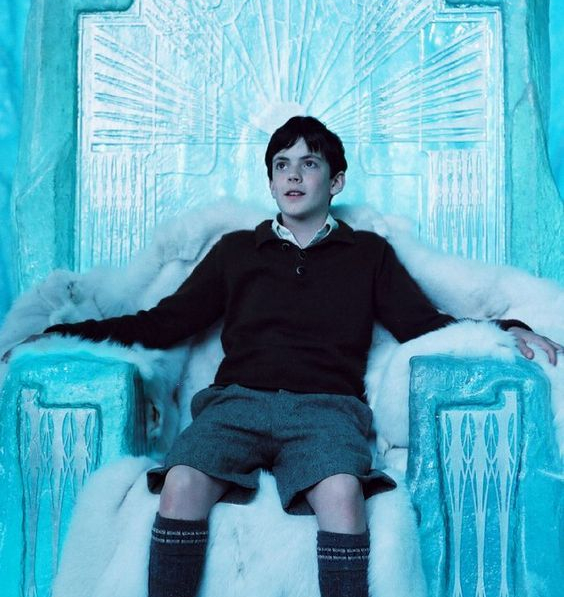
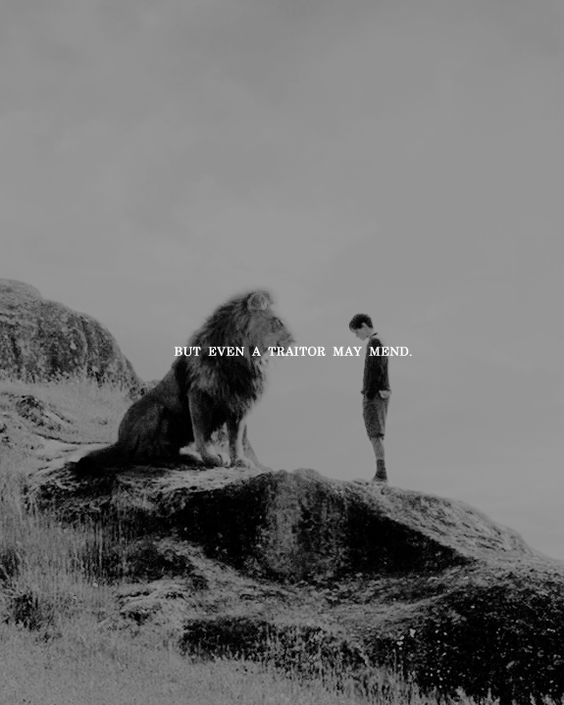
Yep, I’m sure everyone saw this coming. But that’s okay because Edmund Pevensie is the perfect character to use for this post because his character arc is one of the best ever written, imho.
I’m guessing that everyone here has read The Chronicles of Narnia (if not, go read it and then come back, I promise this post will still be here). Or, at the very least, that you guys have all seen the movie. But, on the off chance that I’m wrong, here’s the comprehensive rundown on Edmund’s story from the first movie:
- Edmund is the third eldest child in his family (of four) and he always has to answer to his older brother or sister. He doesn’t like that he’s treated like a child (even though he’s totally still a child) and thus begins his hunger for power over his siblings.
- Fast forward a bit and Edmund is in Narnia talking with the White Witch and yes, she is most definitely evil. The White Witch recognizes that Edmund is a Son of Adam and manipulates Edmund into promising to bring his siblings back. In return, he shall be given more Turkish Delight, which he loves, as well as the opportunity to be king.
- After getting back with Lucy, who was also in Narnia, the siblings wake up Peter and Susan. Lucy tries to convince them that Narnia is real and when asked, Edmund lies about having been to Narnia, probably to seem cooler in his older siblings’ eyes, however, this greatly backfires.
- Fast forward some more and all the Pevensies are in Narnia. Lucy wants to save Mr. Tumnus and, after arriving at the Beaver’s house, Edmund slips away and heads to the White Witch’s castle.
- Upon arriving, he is shocked to find that the White Witch used him and had no intention of ever giving him any more Turkish Delight. He ends up sitting in a cell where he only gets a little water and some weird, bread thing that really just looks like a rock.
- Oh, and Edmund now knows that the White Witch is after his siblings, obviously with an ill intent.
- Eventually after being drug through Narnia by the White Witch, Edmund realizes how mistaken he was to ever trust her and is only freed from her clutches after Aslan makes a private deal with her.
- He is reunited with his siblings and is forgiven by Aslan. He spends the remainder of the movie fighting alongside his family to end the White Witch’s reign and free the Narnians.
Now that we’ve all refreshed our memories of Edmund’s part in the first movie, let’s break things down even further and see if we can’t find some tips for writing the selfish character in our own stories.
Edmund started out in the story as a kid who wanted to prove to his siblings that he could take care of himself. That was his original goal, or motive, if you prefer that terminology. However, his goal became all the more real when the White Witch presented him with an opportunity: she promised that he would be king and his older brother, Peter, wouldn’t. This obviously further sparked his hunger for power over his older brother and he decided to take the bait.
We can use this to our advantage because it leads us straight to our first two points: After you’ve determined your character’s greatest desire, dangle it in front of their face for a while. Tease them with it, make them think that it’s right there in front of them. Then, when they can feel it within their grasp, rip it away (bonus points if you laugh maniacally at their shock).
This is exactly what happens to Edmund when he arrives at the White Witch’s castle. He’s excited, smiling, and practically salivating at the thought of more Turkish Delight. Then, just when he thinks he’s got it in the bag and makes a cocky remark, the White Witch snatches all hope of proving his brother wrong and makes him suffer dearly.
However, this is not the end of the story. Once Edmund is rescued, Aslan offers him a fresh start, a new beginning of sorts. So, after making your character suffer for their selfishness, give them a shot at redemption. But be careful about where you place this redemption. If you give it to them too soon, they won’t learn their lesson and they will just continue in their selfish endeavors.
Finally, I believe there is one more tip we can learn from Edmund’s character arc that extends beyond just the first book or movie. Remember that scene in Prince Caspian when Peter and Caspian are seduced by the White Witch and Edmund shatters her ice wall from behind? Well, I thought about this scene the other day and I discovered an important, often overlooked, part of the selfish character’s arc.
Just because the selfish character learns their lesson and finds redemption, this doesn’t make them exempt from having to deal with the later consequences of their selfish-driven mistake.
I know that’s bit of a complicated answer, but just hear me out. Edmund found redemption and forgiveness in the first movie, right? Well, in Prince Caspian he has to basically kill the White Witch and in The Voyage of The Dawn Treader he has to deal with her ghostly image floating around his head right before the final battle. Just because Edmund learned his lesson doesn’t mean he didn’t have to face the repercussions of his choice later in the other two movies. One bad choice followed Edmund throughout his entire journey in Narnia and I’m sure it continued to affect him throughout the remainder of his life. And that’s realistic. When someone makes a mistake, there’s going to be consequences that they’ll have to deal with, whether they want to or not.
That’s not to say that there isn’t forgiveness and redemption, because there is. It’s just that every choice you make is going to have both intentional and unintentional consequences, sometimes spiraling into a snowball effect that you never saw coming. And when this happens, we can’t run from our past or our mistakes anymore: we have to own up to what we did, take responsibility for our actions, and learn from it so we can move forward.
While that is the end of our Edmund example, I would like to mention one more, alternative path for your selfish character. This idea is based off the character, Dustfinger from the movie, Inkheart. Now, don’t curse me or anything, but I haven’t read the book, so this is just gonna be based on the movie adaption.
I recently watched this movie and while I’ve always had a special fondness for Dustfinger, there was something about his character arc that really stuck with me after watching it this time.
Dustfinger could only get his greatest desire once he was willing to let it go.
Throughout the movie, the audience is pulled into Dustfinger’s desperate quest to go home. It’s all he wants and he does some pretty questionable things to try and get it. But all of them fail because his greatest desire requires someone else’s potential sacrifice. Dustfinger can’t achieve his goal by himself, he needs help.
And it’s when he’s hit his lowest point…his moment of complete and total willingness to accept that he will never be granted his greatest desire— it’s in this moment, where he accepts his new fate with complete finality, that he is finally granted his dream.
So, in simpler terms: Only give your character their greatest desire when they fully accept that they will never get it.
Of course, if you choose to follow Edmund’s version of the selfish character arc, then this won’t exactly fit. But it does offer a good alternative path for your selfish character, which can be helpful when trying to find a new and creative journey that hasn’t been completely overdone already.
And that’s how you write a realistic, yet selfish character arc. With the help of only few, little tips, you can go out and create a selfish character that the world will learn to love for their spectacular character arc and redemption story! It may look daunting, but you can totally do it, especially since there are TONS of examples to draw inspiration from out there just waiting for you to find.
Let’s Talk!
Who are some of your favorite selfish characters? How do you write the selfish character arc? What tips and tricks do you use to write these types of characters that you can add? Or are you a little like me in the fact that you don’t really have many of these specific character arcs in your stories? Drop your thoughts about The Selfish Character® in the comments below and we’ll talk!
Discover more from The Long Voyage
Subscribe to get the latest posts sent to your email.

 The Long Voyage
This post was so detailed and helpful!!!!!! Thanks so much for sharing these fabulous insights, Bree Dawn! As for my thoughts about The Selfish Character®, I haven’t really ever had to write one in any of my stories…but now I’m intrigued 😀
LikeLiked by 1 person
I’m so glad you found this post helpful, Ash! ❤
LikeLike
Oh. Wow. Apparently I have a thing for selfish characters?? Edmund is by far my favorite Pevensie and Dustfinger I 100% adore (though I haven’t’ read the book). I’m trying to think of others, but these two are such good ones!! Thanks for this post. I’ll be linking to it in my quarterly newsletter that goes out tomorrow! ❤
LikeLiked by 1 person
Haha, selfish characters can be really cool if done right. 😉 Also, it’s so nice to find someone else who loves Dustfinger as much as I do💛✨ Ooh, thank you so much for all the exposure and free promotion🙌
LikeLike
Great post!! Selfish characters have soooo much potential for a fascinating, emotional arc. 😀
I really need to read the Chronicles of Narnia again! It’s been YEARS. O_O And don’t worry – I haven’t read Inkheart yet either. (Nor have I watched the movie, hehe.)
LikeLiked by 1 person
They really do have potential cause there are so many different options with them. 😉
You should reread it! I actually only read it for the first time a couple years ago, but I really enjoyed them. Haha, you should at least watch the movie, it’s pretty cute and it also has Brandon Fraser in it, which is always cool.
LikeLike
[…] https://thelongvoyage.org/2019/06/29/how-to-realistically-write-the-selfish-character-arc/ […]
LikeLiked by 1 person
[…] How to (Realistically) Write The Selfish Character Arc […]
LikeLike
[…] How to (Realistically) Write The Selfish Character Arc […]
LikeLike
[…] in June of 2019, I wrote a post called How to (Realistically) Write the Selfish Character Arc. It was the first real post that I published on this blog, and three years later, it remains my […]
LikeLike
[…] done. I don’t always have great ideas, but I think these posts are some of my better ones. The Selfish Character Arc post is still my most popular, and my post about how to lengthen your book will always be special to me. […]
LikeLike
I know this is a 5 year old post, but this article is really good and maybe you can provide spome insight.
I”m writing a story that has a selfish character arc. The story’s about a girl who was transofrmed into a bird by her father (the main antagonist), and he used another girl (one of the MCs) to sort of sypon humanness, so the daughter is a bird during the night. SHe thinks it’s all a dream.
She discovers the truth when the MCs grab he cage mistakenly as a bird fleeing.
The difficulty is the father’s promise is sincere, but a the cost of another life, which I want the daughter to find unacceptable. She’s spoiled because of her upbringing of her father but changes, but I feel like that “pull away” moment you mention not being there maybe makes it missing something. Any thoughts on this is appreciated. Thanks!
LikeLiked by 1 person
Hi Mason,
I’m so glad this post resonated with you. I love getting comments on my old posts because it means they still help people, so never feel bad about commenting on an old post.
Wow, your story sounds really cool. I like that concept with the bird transformation. It reminds me a bit of Swan Lake.
The part that I’m the most intrigued about is that you want the daughter to view her father’s choice to harm another life to help her as unacceptable (if I’m understanding correctly). I think this can totally work because that might be part of the daughter’s internal transformation—going from being more like her father than she wants to admit and doing whatever it takes to “cure” herself but then having something happen (maybe she sees her father doing something terrible) and it stirs something inside of her that makes her realize she doesn’t want to be like her father because he’s selfish and that’s not right.
I’m not sure if that helps, but regardless, I think your story sounds super cool. Best of luck with the writing! 😊
LikeLike
Wow! THat was fast! Thanks, I think i was inspired a lot subconciously by old fairy tales like Grims and Hans Christian Anderson that I grew up on.
Yeah, she sees it as wronge eventually, the idea of actual;ly seeing the harm is a good idea, maybe the villian syphons some life in front of the daughter and she sees it hurting her.
I had the idea of the ending being the character turns from being selfish to self-sacrafice trying to stop her father and is accidently killed.
The story is partially inspured by a poem I read from the 1950s from an obscure british poet named John Smith (not THAT John Smith), about the POV’s uncle who kidanps girls (“‘Orphins’ and ‘Actresses’/so they will seldom be missed.”) and turns them to birds for his collection.It’s a strange, dark moody poem and ends with a bird escaping and him embracing the naked dead body.
OBvously the poem has a metaphor for SA, and I’m toning that down because this story aims for being MG, but I like the sort of noir moodyness to it, and the idea of a the fringe scientist/alcemhist. The story’s actually set in the 1930s Seattle.
The peom is in a colelciton I radnomly found at the library “my kind of verse” and collects stuff from famous poets like Yeats, Keats, Shakespere and T S Elliot (McCavity and THe nameing of cats, my two favorites by him) as well as some tradiotnal poems. I later bought my own copy of the book.
Thank you!
LikeLiked by 1 person
Yeah, I’m nothing if not chronically online so I end up responding to things quickly. 😂
Yeah, I think that could totally work. I definitely agree with taming down the abuse since that doesn’t really work well for a MG audience. You could always age them up a bit and make it a YA if you want to still explore those darker sides of the story. Just a thought.
LikeLike